
Douala receives some of the highest annual rainfall of any major African city. Every rainy season, entire neighborhoods; Bépanda, parts of Bonamoussadi, Ndokotti, areas near the Wouri, flood. Buildings that were not designed for these conditions suffer cracked foundations, rising damp, structural deterioration, and in severe cases, partial failure.
If you own or plan to buy land in Douala and are unsure about flooding risk, this guide explains what must be assessed before a single brick is laid.
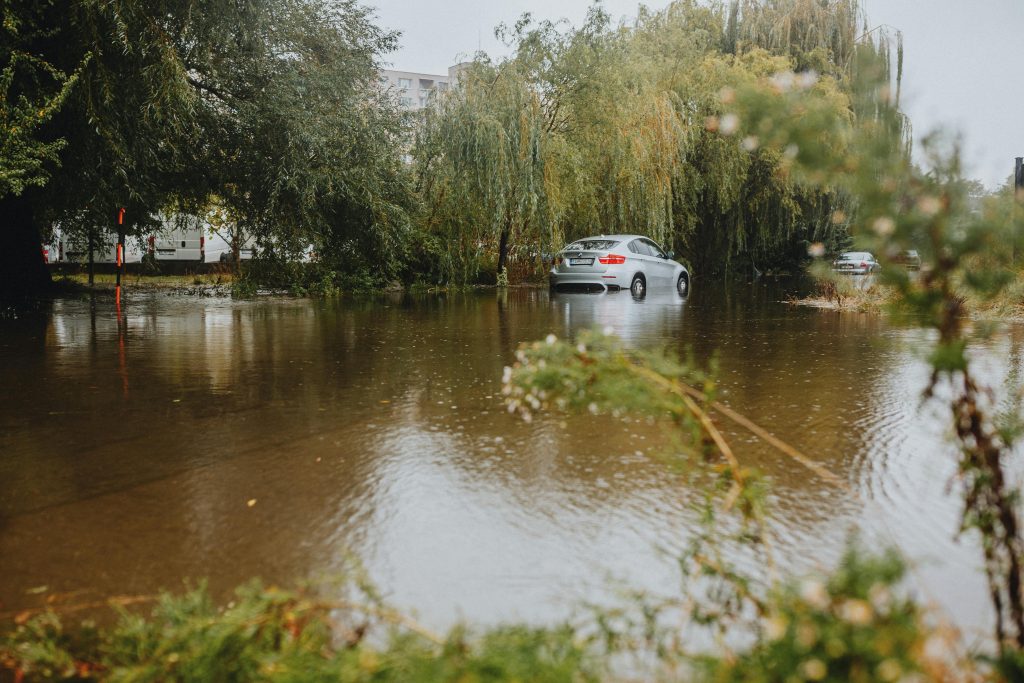
How to Assess Your Plot’s Flood Risk
Elevation and topography
The most reliable indicator. Low-lying plots near rivers, streams; many now covered by the expanding city or in natural drainage basins are at highest risk. Plots on elevated ground, such as parts of Bonapriso, Makepe heights, or the Logpom-Logbessou corridor, are significantly less exposed. A civil engineer can assess a plot’s elevation relative to the surrounding drainage network as part of a preliminary site assessment.
Soil type and bearing capacity
Douala sits largely on clay soils with variable bearing capacity. In flood-prone areas, soils become saturated and lose bearing strength during heavy rain. A foundation that performs adequately in dry conditions may be compromised in the wet season. A soil study (étude géotechnique) is not optional in these areas; it determines what foundation type is actually required for a stable structure.
Existing drainage infrastructure
Before building, observe the site during or immediately after heavy rain. Where does the water come from? Where does it go? Is there a functioning open drain nearby? In many Douala neighborhoods, drainage channels are blocked with waste, causing water to back up. Your engineer must factor the existing drainage reality into the site plan.
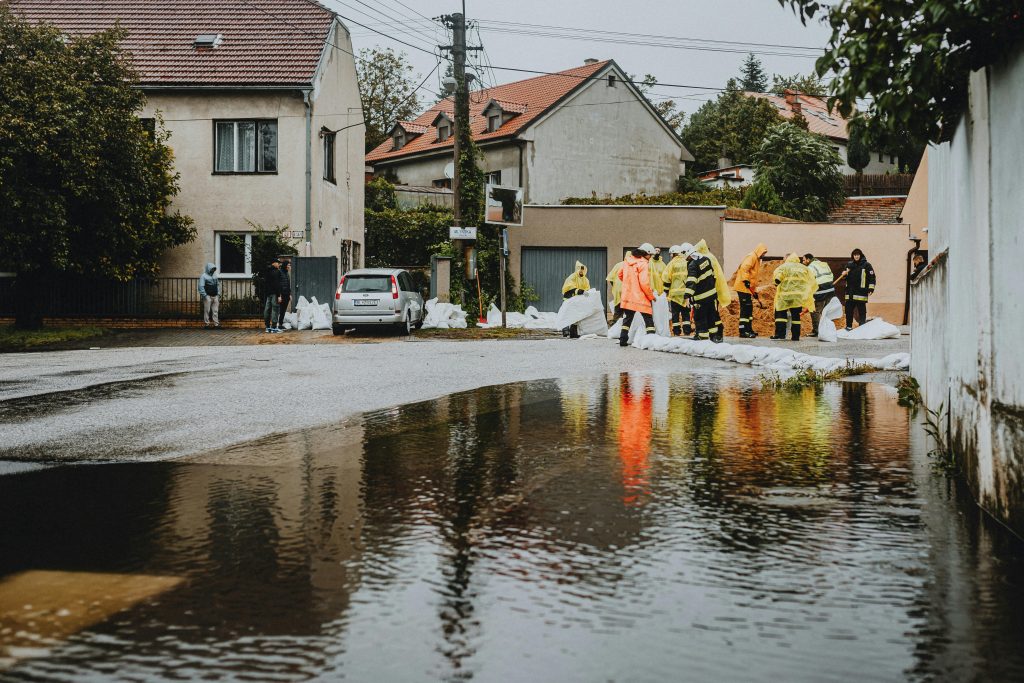
Building Smart in Flood-Prone Areas
Raise the finished floor level
The finished floor level should be set sufficiently above the surrounding ground level in flood-risk areas of Douala. The exact height depends on the site’s specific flood history and drainage conditions; your engineer will specify this based on the assessment. This single measure keeps floodwater outside even when surrounding areas are inundated.
Design proper on-site drainage
Every plot in Douala needs a drainage plan even on elevated ground. Surface water from roof runoff and paved areas must be directed away from the foundation toward a drainage channel or soakaway. Perimeter drains around the foundation slab are standard practice in flood-risk zones.
Use the appropriate foundation type
In clay soils with poor drainage, standard strip foundations may not be sufficient. Raft foundations or pile foundations distribute loads more evenly and perform better in saturated conditions. The correct type depends entirely on your specific soil study results; this is not a decision to make by assumption or precedent alone.
Waterproof below and at grade
Apply proper waterproofing membrane to all below-grade concrete surfaces and install damp-proof courses at the base of all walls. These prevent rising damp, one of the most destructive long-term problems in Douala buildings and one of the most preventable when addressed at construction stage.